The Justice for Girls Convening and Festival will take place in Kenya from August 30 to September 4, bringing together activists, survivors, policymakers, governments, funders and movement leaders committed to ending female genital mutilation/cutting (FGM/C) and child, early and forced Marriage within a generation.
More than a convening, the festival is an opportunity to bring people together around a shared ambition: to turn the knowledge, experiences and leadership of girls and survivors into action. It comes at an important moment for the women’s and girls’ rights movement, as we celebrate progress while confronting persistent inequalities, gaps in implementation and growing resistance to gender equality.
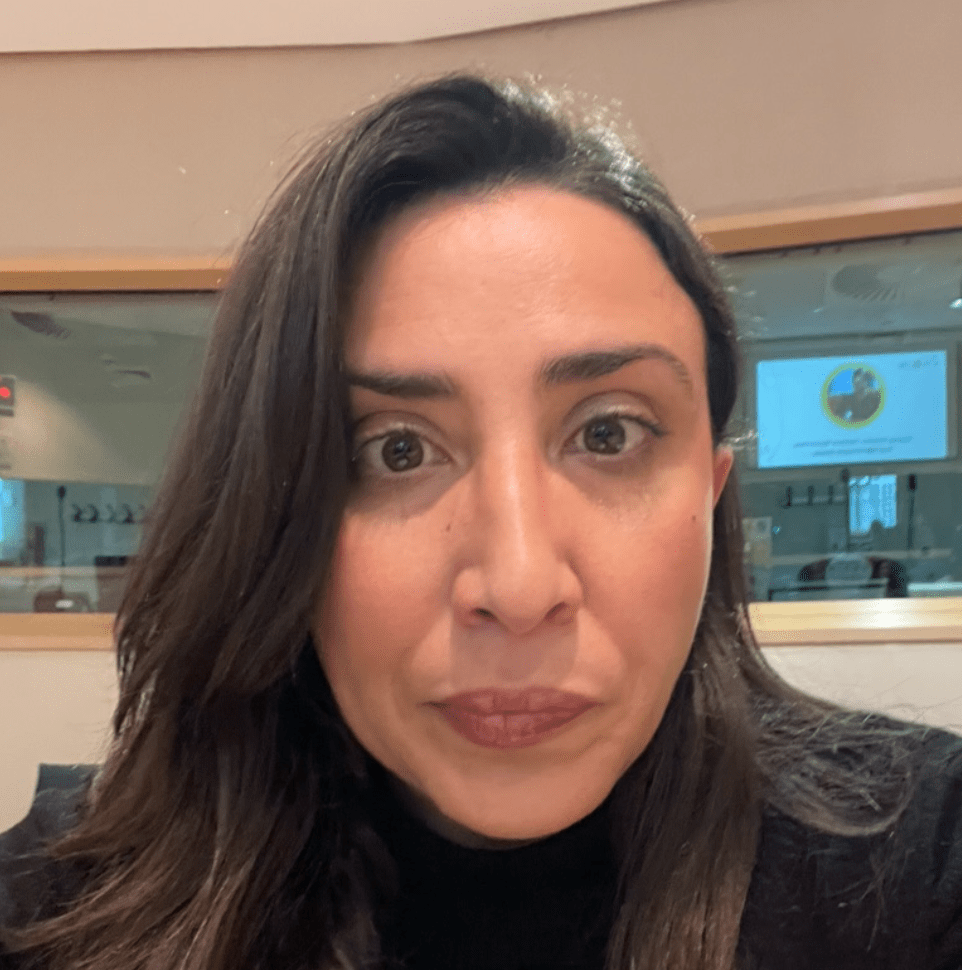
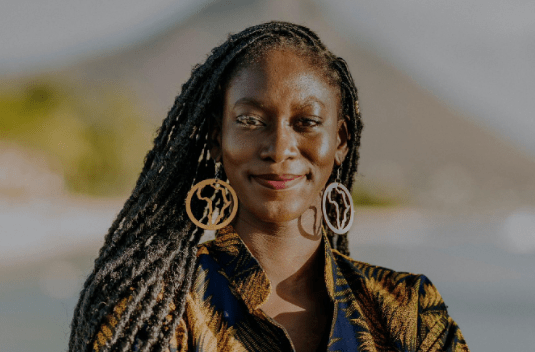
Ahead of the convening, advocate and feminist human rights lawyer, Awa Gai, reflects on her connection to these movements, what’s missing from current advocacy efforts, and what she hopes this convening will accomplish.
About the Author:
Bio: Awa Gai is a feminist human rights lawyer from The Gambia working at the intersection of law, human rights and gender justice. Awa has made significant contributions to advancing women and girls’ rights, notably founding her country’s first and largest women’s awards platform, celebrating women and inspiring girls. She is a 2024 Mandela Washington Fellow and a 2025 Waging Justice for Women Fellow.
Vision for the Movement
For Awa the connection to and the desire to be involved in these movements is deeply personal.
“My commitment to ending FGM/C and child marriage did not begin with my legal career. It began much earlier, growing up in a small village in The Gambia, where I saw how the lives and choices of girls could be shaped by practices and expectations that were often treated as simply the way things were.
As a student and later as Head Girl in secondary school, I began speaking out about issues affecting girls, including FGM/C and child marriage. At the time, I did not have the language of “strategic litigation” or “structural discrimination”. I simply knew that some of the things happening to girls around me were unfair, and that being told that something was cultural or customary did not make it right.
That early experience eventually led me into women’s rights advocacy, and ultimately into law. I came to understand that advocacy could change attitudes, but that law could also change the systems that reproduce inequality. Today, my work sits at that intersection: using law, advocacy and strategic litigation to challenge not only individual violations, but the structures that allow them to continue.
That is why the Justice for Girls movement is deeply meaningful to me. For me, this is not an abstract global issue. It is connected to the girls I grew up with, the girls I first advocated for, and the reason I became a lawyer in the first place.”
One of the Justice for Girls initiative’s goals is to develop a movement-led global action plan for the next five years. Awa hopes this plan broadens the approach FGM/C and child marriage.
“I hope the plan is ambitious enough to move us beyond counting how many countries have laws against FGM/C and child marriage. The existence of a law is important, but it is not the same as justice. I would like to see a plan that connects legal reform with implementation and accountability: clear national commitments, measurable targets, sustainable financing, survivor-led monitoring, stronger enforcement, access to justice and mechanisms for holding institutions accountable when commitments are not implemented.
I would also want the plan to recognise that these practices do not exist in isolation. They are connected to poverty, unequal access to education, economic dependence, social expectations, gender inequality and, in many contexts, unequal power within families and communities.
Most importantly, the plan should be owned by the movements and communities doing this work every day. Global commitments matter, but they become meaningful when a girl in a rural community can actually experience the change those commitments promise.”
Central to that vision is survivor leadership. Awa knows that survivor leadership is needed to create real transformative change, making events like this convening essential part of the movements to end FGM/C and child marriage.
“Because those most affected by a problem should have meaningful power in shaping the solutions to it. Survivor leadership brings a knowledge that cannot be replicated by policy papers, statistics or even the best-intentioned advocacy. At the same time, survivor leadership should not mean that survivors are expected to continually relive or publicly share their trauma in order to be heard.
That is where allies have an important role. Allies should use their institutional access, legal expertise, resources and platforms to help create the conditions in which survivor-led movements can lead sustainably, not to take over the agenda.
For me, the goal is not simply to put survivors at the front of a panel. It is to ensure that they have influence over priorities, resources, strategies and accountability mechanisms. Survivor leadership and allyship should therefore be complementary: survivors bring lived expertise and leadership, while allies use their power and resources to help dismantle the structures that created the injustice in the first place.”
Awa adds that advocates around the world are confronting increasingly organized efforts to undermine women’s and girls’ rights. She believes the movement must develop ways to stand up to these narratives without alienating communities.
“We have to become better at challenging narratives without losing sight of the communities we are trying to reach. In The Gambia, practices such as child marriage or FGM/C can sometimes be defended through claims about culture, tradition or religion. As a Gambian Muslim woman working on these issues, I have experienced how quickly advocating for girls’ rights can be framed as an attack on religion or culture.
I have learned that we cannot simply respond by dismissing people’s beliefs. We have to engage the arguments seriously, distinguish faith from harmful interpretations and make clear that culture is not static and religion should not be used as a justification for violating the rights and dignity of girls.
We also need to tell better stories. Anti-rights movements are often effective because they make complex issues sound simple. We need to communicate just as effectively, using evidence, lived experiences, religious and cultural voices that support girls’ rights, and stories that show what girls stand to gain when they are free to make decisions about their own lives. And we must be prepared to defend the people who speak out. In many places, women human rights defenders themselves become targets of intimidation when they challenge these narratives. Protecting their voices is part of challenging the narratives.”
Strengthening Survivor-Led Movements
The convening places a strong emphasis on survivor wellbeing, alongside a festival celebrating music, art, and storytelling. For Awa, it’s important that spaces like this convening exist so survivors have that chance to heal while opening up about their stories.
“Advocacy can ask people to constantly confront painful experiences. We ask survivors to tell their stories, speak to policymakers, participate in campaigns, give interviews and help us build movements. But we sometimes forget to ask what the movement is giving back to them. A movement that is committed to justice must also be committed to the wellbeing of the people who carry that work. Healing is therefore not separate from advocacy. It is part of sustaining it. It creates space for people to reconnect with themselves, with community and with joy, rather than allowing their identities to be defined only by what happened to them.
I also think the festival element of this convening is powerful for that reason. Music, art, storytelling and celebration remind us that girls and survivors are not simply people we are trying to protect from harm. They are whole human beings with creativity, dreams, joy and futures. Justice should ultimately make more room for life, not simply less room for violence.”
Supporting survivor-led movements also requires sustained investment. Ending FGM/C requires more than awareness campaigns or policy changes. To Awa, it requires sustained investment in the grassroots organizations doing the difficult, long-term work of changing social norms
“Sustained investment gives grassroots and survivor-led organisations something that short-term funding often cannot: the ability to build power. Ending FGM/C and child marriage requires more than a campaign cycle. It requires relationships with communities, sustained advocacy with governments, legal and policy reform, survivor support, documentation, monitoring and the ability to remain engaged when political attention moves elsewhere.
Long-term funding also allows organisations to invest in people, especially young women and girls, and to build the next generation of leaders rather than constantly responding to crises. I have seen through my own work that sustainable change rarely comes from one intervention. It comes from persistence: building evidence, building movements, pursuing accountability and returning to the table again and again.
That is why I hope the new fund will not only fund activities. It will invest in the institutional strength, leadership and long-term vision of the organisations closest to the issue.”
Alongside learning from others, through her advocacy and work as a lawyer, Awa has learned many valuable lessons that she’s looking forward to sharing with other attendees at the convening.
“One lesson I am excited to share is the importance of connecting individual experiences to broader structural change, while also creating spaces where women and girls can realise their fullest potential.
Through strategic litigation, I have seen how one person’s experience can become the basis for challenging a much larger system. In our work on child marriage, for example, the question cannot stop at whether an individual girl was harmed. We have to ask: What laws allowed this to happen? Which institutions failed her? What should the State have done differently? And, most importantly, how do we make sure another girl does not experience the same harm? That is the power of strategic advocacy: transforming individual injustice into an opportunity for systemic accountability.
But I have also learned that changing systems is not only about taking cases to court. It is also about changing who is seen, who is heard and who is encouraged to lead. This is one of the ideas behind She Awards Gambia, an initiative I founded to celebrate and amplify the achievements of Gambian women across different fields. I strongly believe that girls and young women need to see women occupying spaces of leadership and creating change, because representation can expand what they believe is possible for themselves.
The lesson I would bring to the convening is therefore this: we should never lose sight of the individual girl while fighting to change the system, and we should also be intentional about creating a world in which she can one day become one of the people leading that change.”
Looking Ahead
Ultimately, Awa hopes that the conversations that start in Kenya will translate into action for the movements to end FGM/C and child marriage
“The real test of a convening is what happens after everyone goes home. I would like to see the commitments made in Kenya translated into named actors, timelines and measurable actions. Who is responsible for what? What resources are attached to those commitments? How will progress be monitored? And when governments or institutions fail to act, what accountability mechanisms will be available?
I also think we need to resist the temptation to create another global document that sits on a shelf. The strongest outcome would be a living movement plan that organisations can use in their own countries, with regular opportunities to assess progress, share what is working, identify setbacks and hold one another accountable.
For me, accountability is particularly important because I come from a context where we have seen progressive laws and commitments exist alongside persistent violations. The gap between law and lived reality is where much of the work remains.”
“My ultimate hope is that we look back at this convening not as the moment when we had another important conversation about girls, but as the moment when the movement decided to change how it worked. I hope its legacy is a stronger generation of survivor leaders, better-resourced grassroots movements, governments that understand that commitments must be implemented, and legal and social systems that no longer ask girls to sacrifice their childhoods in the name of tradition, family honour or social expectations.
But on a more personal level, I hope that a girl growing up in a community like the one I grew up in will have a fundamentally different experience from the one many of us had. I want her to grow up knowing that her body belongs to her. That her future belongs to her. That she can stay in school, decide what she wants to become, and speak without being told that her voice is disrespectful simply because she is a girl.
I became a lawyer because I came to believe that the law could be a powerful tool for advancing women and girl’s rights. But the law is only one tool. The bigger goal is to create societies in which girls do not have to fight extraordinary battles simply to enjoy ordinary freedoms. If this convening helps move us closer to that world and equips the women and girls who will continue the work after us to take it even further, that would be a legacy worth building.”