The Justice for Girls Convening & Festival will take place in Kenya soon, bringing together activists, survivors, policymakers and governments, funders, and leaders committed to ending female genital mutilation/cutting (FGM/C) and child marriage in this generation. It is a space for bold ideas, shared strategies, and collective action, grounded in lived experience and global collaboration, at a critical moment for the gender justice community.
In the lead-up to the convening, we’ve been speaking with Advocates and Survivor Expert Leaders from around the world about what this moment means for the movement, what they hope participants will accomplish in Kenya, and the future they’re working to build together.
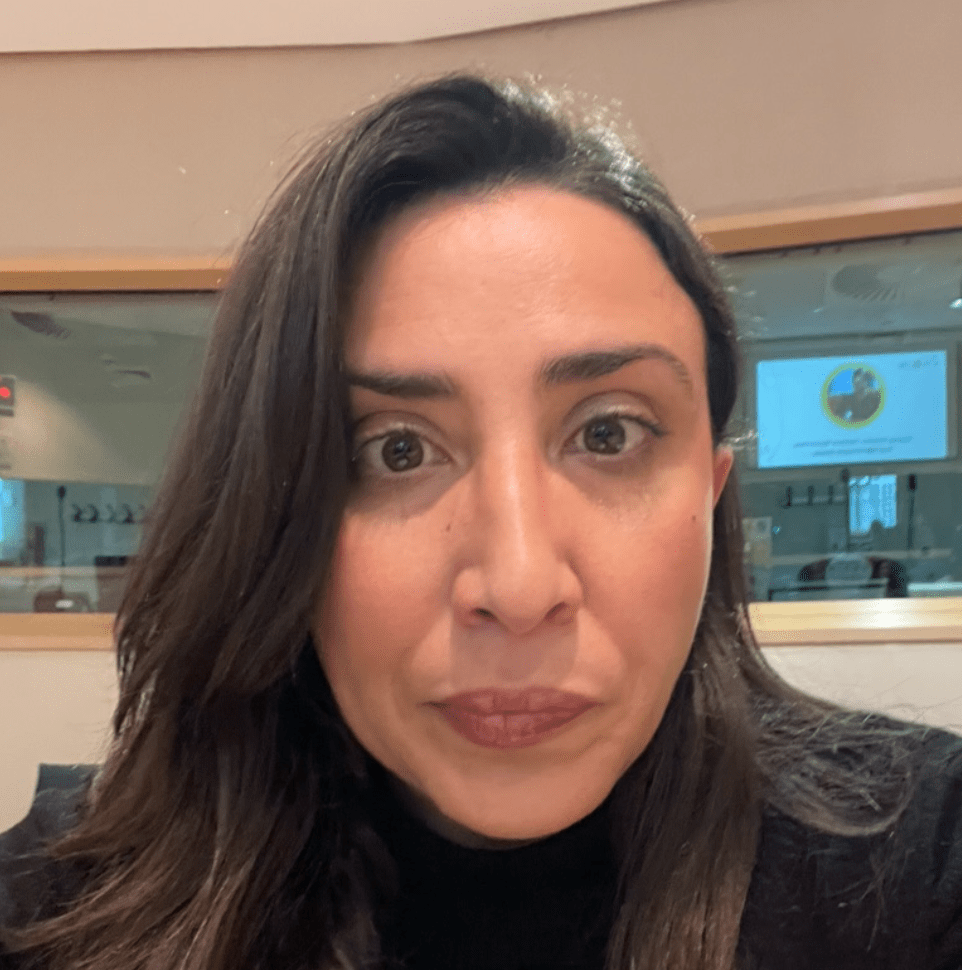
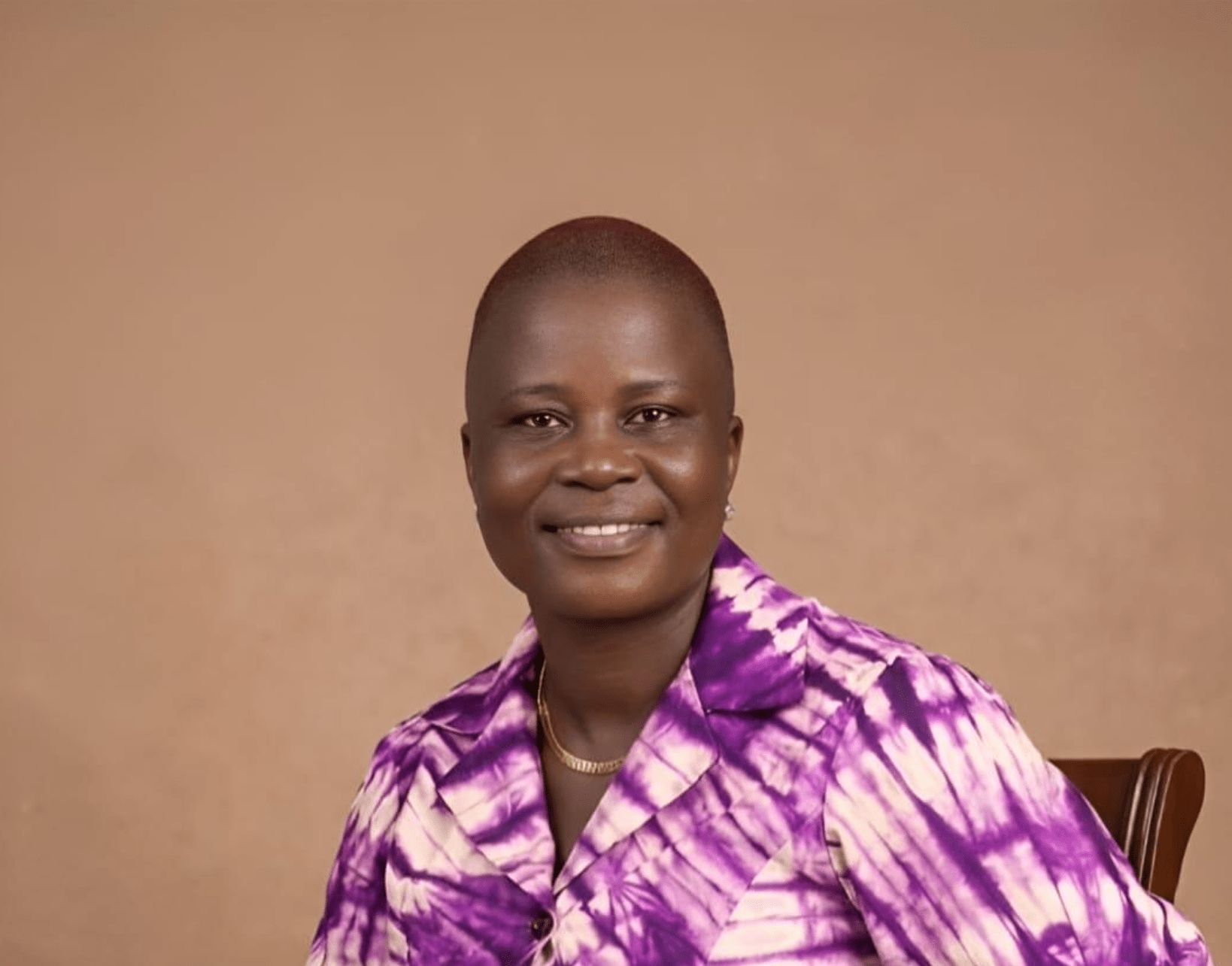
Below, Jacqueline C. Samuels, Founder and Executive Secretary of the Covenant Foundation for Girls (COFGIRLS), reflects on the experiences that shaped her advocacy, the importance of survivor-led movements, and what she hopes the Justice for Girls Convening & Festival can make possible.
About the Author: Jacqueline C. Samuels is the Founder and Executive Secretary of the Covenant Foundation for Girls (COFGIRLS), a Liberian nonprofit based in Ganta City, Nimba County, that educates girls about the dangers of FGM/C. She is a founding member and current Co-Host of the End FGM/C Network Africa, where she helps coordinate its sub-regional structures, General Assembly, and continental strategy. She also serves as Policy and Legal Advisor to the National Coalition against Harmful Practices (NACAHP) and works on GBV/SEA/SH safeguarding for World Bank-financed infrastructure projects in Liberia.
Jacqueline holds an MPH, a BSc, and a nursing qualification and is completing an LL.B. at the Louis Arthur Grimes School of Law, University of Liberia. She is also a 2026 alumna of the U.S. Department of State’s International Visitor Leadership Program on Workforce and Business Development.
Vision for the Movement
For Jacqueline, the work to end FGM/C is deeply personal, rooted in her own childhood experiences and the death of two friends.
“My inspiration did not begin in a clinic or a conference room; it began in grief. Until age seven, I had two lovely childhood girlfriends. We were meant to be mutilated on the same day, but because I was the granddaughter of the cutter, they went through the exercise first. It ended up causing their death, because the bleeding from the cut began to spread.
I found it difficult, for a long time, to forgive my grandmother for her part in carrying that practice forward. But that loss, and going through the practice myself at a very early age, taught me something I have carried ever since: I know that pain that the cut causes. That is why I feel the practice must end with me, and a new generation must begin with me, so no one else feels that pain. I knew it was my mission to carry that message to a wider audience, in spirit, in my community, and in my country, and to save my own girls from going through the same practice.”
That personal commitment would go on to shape Jacqueline’s work as a nurse, public health practitioner and advocate in Liberia.
Hence, as a nurse and public health practitioner in Nimba County, I saw first-hand the medical complications, the silence, and the shame that FGM/C and child marriage leave behind, and how rarely the girls affected were ever asked what they wanted for their own futures. Founding COFGIRLS, and later stepping into the Executive Secretary role, as well as serving as one of the Co-Hosts at the End FGM/C Network Africa, grew directly out of that frustration: healthcare alone could not fix a problem rooted in law, policy, and power. Joining the Justice for Girls movement felt like the natural next step, a chance to connect frontline, community-level protection work in Liberia to a continental and now global effort with the ambition to actually finish the job within a generation, not just manage its symptoms indefinitely.”
As organizers develop a movement-led global plan for the next five years, Jacqueline hopes it will address what frontline organizations need to sustain their work.
“From where I sit, coordinating six Sub-Regional Reference Groups across Africa and negotiating consultancy and grant relationships that would keep that coordination funded, I hope the plan takes seriously how much of this movement’s capacity is consumed by administrative and financial survival rather than programming. Concrete steps I would like to see: multi-year, flexible funding commitments that reach national and sub-regional networks directly rather than only global intermediaries; harmonized legal and policy benchmarks that governments can be held to, with clear domestication timelines at the national level; dedicated resourcing for survivor wellbeing and healing, not just advocacy output; and shared research and data infrastructure so member organizations are not each rebuilding the evidence base from scratch. Liberia and its neighbors also need explicit inclusion; plans built primarily around anglophone East and West African hubs can leave cross-border contexts like ours under-resourced despite significant prevalence.”
For Jacqueline, survivor leadership is also fundamental to both the legitimacy and effectiveness of the movement.
“In my Network role, I have watched what happens when strategy is imposed from outside a community versus grown from within it; the latter holds up under political and financial pressure in a way the former rarely does. Survivor leadership ensures the plan answers the right questions: not only how do we end a practice, but how do we do so in a way that protects, rather than re-traumatizes, the very girls and women it is meant to serve.
She also sees an important role for allies in supporting survivor-led work.
Allies then matter for what survivors and frontline organizations often cannot supply alone: access to donor rooms, legal drafting capacity, diplomatic weight, and platforms. The model I try to build in my own work is exactly that division of labor: community and survivor voice setting direction, technical and legal allies building the scaffolding underneath it.”
Challenging the narratives that normalize violence against girls will also require strategies that resonate within communities.
“Anti-rights narratives are effective because they are simple, repeated, and often wrapped in claims of culture or tradition. Countering them requires the same discipline: consistent, evidence-based messaging repeated across every platform we hold, delivered by messengers the target audience already trusts-survivors, yes, but also religious and traditional leaders who have themselves changed their minds.
For Jacqueline, engaging those trusted voices can help create more durable change.
“In my own context, some of the most durable shifts have come not from confronting traditional structures head-on but from working through them, engaging chiefs, elders, and faith leaders as co-authors of the narrative change rather than opponents to be defeated. I would also urge the convening to invest in rapid-response capacity, a coordinated way for the movement to counter disinformation as it spreads, rather than only after the damage is done.”
Strengthening Survivor-Led Movements
The convening will make space not only for advocacy, but for survivor wellbeing, music, art and storytelling.
“A movement that only ever asks survivors to relive their trauma in service of a policy outcome will eventually burn out the very people it depends on. Healing and advocacy are not separate tracks; they are sequential and mutually reinforcing. In our programming, the girls and women who have had genuine space to process what happened to them are consistently the ones who go on to become the most effective, sustained advocates, because they are speaking from a place of agency rather than raw wound. A festival of music, art, and storytelling alongside the formal convening sends an important signal: that survivors are whole people with culture, joy, and creativity, not only case studies of harm.”
The convening will also mark the announcement of a new fund intended to mobilize resources for work to end FGM/C. For Samuels, sustained investment can change what grassroots organizations are able to build.
“Sustained investment is what lets grassroots organizations move from reactive to strategic. With reliable, multi-year resourcing, organizations like ours can build institutional memory, retain trained staff, invest in the legal and governance infrastructure that donors eventually require anyway, and plan programming years rather than months in advance.
She has also seen firsthand what happens when that stability is missing.
“I have seen the opposite happen too often: strong technical work stalled or lost entirely because a single consultancy or grant relationship broke down. Long-term investment also builds the credibility grassroots organizations need to influence policy directly, rather than only implementing programs designed elsewhere. A new, dedicated fund that reaches national and sub-regional actors, not only large international intermediaries, would materially change what is possible in contexts like Liberia.”
Jacqueline also brings to Kenya lessons from COFGIRLS and her work across the End FGM/C Network Africa.
“That legal and policy infrastructure is not separate from frontline protection work; it is frontline protection work. Much of what has moved the needle in Liberia has come from unglamorous groundwork: strengthening governance systems, documenting board decisions and organizational resolutions properly, and building the kind of institutional credibility that lets a grassroots organization sit at the same table as government ministries and international donors.”
That experience extends beyond individual organizations to the value of strong networks across borders.
“I am also proud of what cross-border coordination through the End FGM/C Network Africa has shown: that sub-regional structures, built and owned by member organizations themselves, can hold together even through real setbacks, including having to formally manage a failed consultancy contract mid-strategy, without losing momentum on the underlying mission.”
Looking Ahead
For the conversations in Kenya to translate into lasting change, Jacqueline wants accountability to be part of the process from the beginning.
“Accountability structures have to be built into the convening itself, not added afterward. I would want to see named owners and timelines attached to every commitment made in Naivasha, a public mechanism for tracking progress against the five-year plan, and a clear channel for national and sub-regional networks, including those, like ours, based outside the traditional convening hubs, to stay connected to the process rather than receiving updates secondhand.”
She also points to the importance of ensuring that commitments made in Kenya are carried into the spaces where governments and donors can be held accountable.
“Sustained change also depends on the new fund translating quickly into resources that reach implementing organizations, and on donors and governments who make commitments in Kenya being held to them at the next major moment on the calendar, whether that is a UN forum, an African Union summit, or national legislative sessions.”
Ultimately, Samuels hopes the convening will help position FGM/C and child marriage firmly within the broader struggle for human rights and justice.
“I hope this convening is remembered as the moment the movement stopped treating FGM/C and child marriage as niche or culturally sensitive issues to be handled delicately, and instead placed them squarely where they belong, as serious, prosecutable violations of children’s rights that intersect with every other justice movement: gender justice, racial justice, health equity, and economic development.
Her deeper hope is that what is built in Kenya lasts well beyond the convening itself.
“My deeper hope is structural: that the partnerships, funding pathways, and survivor-led leadership models built in Kenya outlive the convening itself and become the default way this work is resourced globally, so that a girl born in Nimba County, in my home village, has genuinely the same protection under law and practice as a girl born anywhere else in the world.”