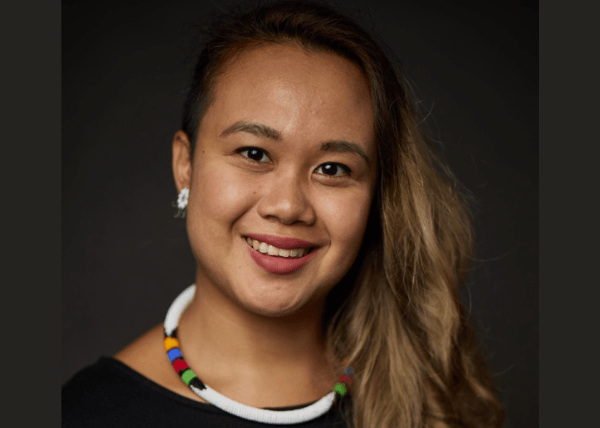
Saza Faradilla on Movement Solidarity

In less than one month, the Justice for Girls Convening & Festival will take place in Kenya, bringing together activists, survivors, policymakers and governments, funders, and leaders committed to ending female gential mutilation/cutting (FGM/C) and child marriage to this generation. It is a space for bold ideas, shared strategies, and collective action, grounded in lived experience and global collaboration, at a critical moment for the gender justice community. 

Below, Survivor Expert Leader Saza Faradilla reflects on what she hopes this convening will accomplish, why this gathering matters now, and what it means to her to be an Advocate and a Survivor Expert Leader.

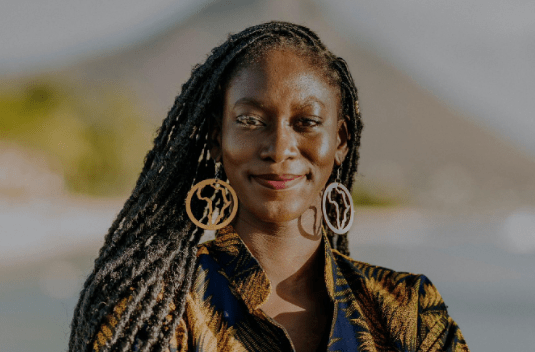
About Saza Faradilla: Saza Faradilla (she/they) is a co-founder of End Female Genital Cutting Singapore, which envisions a world where the practice of FGC is obsolete. She raises awareness on social media and on-the-ground, and participates in local and international lobbying at the United Nations to bring attention to the fact that FGC is a pressing concern in Asia. Equally important, she calls for a culturally-contextual and intersectional feminist approach when dealing with sexual and gender based violence across diverse Asian communities. Saza is currently completing a Masters in Human Rights and Democratisation in Mahidol University and Universities Gadjahmada in Southeast Asia.


From Survivor to Advocate

For Saza, the journey into advocacy began with a moment of personal discovery that changed the course of her life.

“I learned as an adult that I had undergone female genital cutting as a baby. Realizing that something had been done to my body without my knowledge or consent left me feeling violated, angry, and determined to understand why this practice continues to be normalised.

Ultimately, that realization led her toward a movement dedicated to ending the practice.

“That personal experience led me towards advocacy, which has shown me that change is possible. Through End FGC Singapore and my work across Asia, I have seen how sustained advocacy can shift public conversations and institutional positions. For example, after years of engagement by advocates, Singapore’s government publicly acknowledged at the (Convention on the Elimination of All Forms of Discrimination Against Women) CEDAW review that its position on FGC had changed. That was significant because, for a long time, the issue was treated as invisible or as something too sensitive to discuss.

Whenever I speak about FGC, I see how strongly people respond. There is often an immediate visceral reaction, including from people outside affected communities. Yet that concern is rarely matched by sustained resources for the grassroots advocates, survivor leaders, healthcare workers, religious actors, and community organisers who are doing the difficult work of changing gender norms from within. There is still a huge gap between the scale of the problem and the funding available to the communities and organizations that are working to end it.”

Building a Movement That Lasts

While Saza’s advocacy began with her own experience, her vision for the movement looks far beyond individual stories. As organizers develop a movement-led global plan for the next five years, she hopes the convening produces concrete commitments that strengthen survivor-led organizations, recognize local expertise, and build solidarity across movements working toward gender justice.

“I hope the plan includes serious, long-term funding for grassroots and survivor-led movements. Too often, survivor leaders are invited to share their stories, provide emotional labour, and lend legitimacy to global spaces, while the organisations closest to communities remain underfunded and overstretched. We need funding that allows local groups to build staff capacity, support survivors, conduct research, organise conversations, and respond to community needs without constantly having to prove their worth through narrow short-term indicators.

I also hope the plan recognises that there is no single intervention that will work everywhere. Interventions need to be culturally nuanced, locally led, and responsive to specific contexts rather than imported as universal models.

Finally, the plan should create solidarity across regions and movements. Ending FGC and child marriage cannot be separated from wider struggles against racism, economic inequality, authoritarianism, militarism, and patriarchy. We need to ask why girls’ bodies are controlled in the first place, who benefits from that control, and how systems of capitalism and patriarchy make violence against women and girls easier to normalise.”

Survivors Are Experts

For Saza, a survivor-led movement is about much more than representation. It is about recognizing survivors as experts whose lived experience, professional knowledge, and leadership should shape every aspect of the movement.

“A survivor-led convening is essential because survivors understand the issue not only as a policy problem, but as something that shapes bodies, families, relationships, faith, identity, and everyday life. Survivors can speak to what is actually needed on the ground, including the kinds of support, language, advocacy, and community engagement that feel respectful and effective.

Survivors should be recognised as experts, not simply pitied as victims or invited only to share painful stories. Many survivors are organisers, researchers, healthcare workers, lawyers, artists, religious leaders, and community educators. Their knowledge should shape movement priorities, funding decisions, research agendas, and policy conversations.

Allies are equally important, especially when they use their access, institutional power, and resources to support survivor-led work rather than speak over survivors. Ending FGC and child marriage requires collective action across generations, sectors, and communities.”

Challenging Systems, Not Just Practices

Ending FGC and child marriage, Saza believes, requires confronting more than individual practices. It means challenging the larger systems that normalize violence against girls while building a movement grounded in solidarity, inclusion, and a shared commitment to bodily autonomy.

“We need to challenge anti-rights narratives by addressing the larger systems that make violence against girls seem normal, inevitable, or culturally protected. Patriarchy is central to this, but so are economic systems that leave families without security, place care work on women, and make girls’ futures dependent on marriage, respectability, or control of their bodies.

This means building solidarity with working-class communities and ensuring that our advocacy does not shame or isolate the people we hope to engage. We need to be honest about structural inequality while also respecting the complexity of people’s lives, beliefs, and relationships.

The movement must also be willing to confront difficult questions within our own spaces. Bodily autonomy should apply consistently. This includes conversations about non-consensual genital cutting of children of all genders, and ensuring that trans people and trans survivors are included, supported, and placed at the forefront of discussions about bodily autonomy. A movement for justice cannot be selective about whose bodies, identities, or experiences are seen as worthy of protection.”

Healing Is Part of the Movement

The Justice for Girls Convening & Festival places healing alongside advocacy, recognizing that sustainable movements require spaces for both action and restoration. For Saza, caring for survivors is not separate from the work of advancing gender justice but fundamental to it.

“Creating spaces for healing is essential because advocacy can be emotionally demanding, especially for survivors who are repeatedly asked to speak about experiences that may bring up difficult feelings. Survivors should not be expected to turn pain into public education without care, community, and support around them.

Healing spaces acknowledge that survivors are whole people, not only advocates or spokespeople. They create room for rest, connection, joy, grief, creativity, and reflection. Art, music, storytelling, and celebration are especially important because they allow people to imagine different futures. They remind us that our movements are not only about resisting harm, but also about building communities where people can feel safe, valued, and free.”

Investing in Grassroots Power

For Saza, meaningful change requires more than short-term projects or one-time grants. Sustained investment gives survivor-led and grassroots organizations the stability to build trust, respond to community needs, and create lasting social change on their own terms.

“With sustained, long-term investment, survivor-led and grassroots organisations can do the kind of deep work that creates real social change. They can build relationships over time, work alongside communities, respond to emerging needs, support survivors, train new leaders, and create programmes grounded in trust rather than in short funding cycles.

Long-term funding also gives organisations breathing room. It means they are not constantly writing reports, chasing the next grant, or being micromanaged through narrow KPIs that do not capture the slow and relational nature of systemic change. Funders need to understand that ending FGC and child marriage are not quick projects. It involves changing beliefs, family expectations, religious understandings, institutional practices, and social norms that may have existed for generations.”

Creating New Ways Into the Conversation

Some of the most meaningful conversations begin in unexpected ways. Through End FGC Singapore, Saza has learned that art, culture, and creativity can open doors that traditional advocacy sometimes cannot.

“One lesson from End FGC Singapore is that creative and culturally grounded approaches can open conversations that formal advocacy sometimes cannot. For our fifth anniversary, we organised a dance performance that brought together Malay dance, bodily autonomy, and empowerment. We also used small symbolic moments, such as sharing oranges together, to create a warmer and more inviting space for conversations about female sexuality, consent, and control over our bodies.

That experience reminded us that advocacy does not always have to begin with statistics, policy language, or confrontation. Art can make people feel something first. It can invite people into difficult conversations without making them defensive.

Another lesson is the importance of maintaining consistent pressure on political office holders and institutions. FGC is often dismissed as a minority issue or treated as something too sensitive to address publicly. It is important to show policymakers that this issue matters deeply to survivors, families, professionals, and wider communities. Persistent engagement can shift what institutions believe they are allowed, expected, or required to say on the issue.”

Looking Beyond Kenya

For Saza, the conversations that begin in Kenya should be the foundation for a stronger, more connected global movement. She hopes the convening leads to lasting relationships, shared accountability, and sustained collaboration that continues long after participants return home.

“The convening must be the beginning of ongoing coordination. We need clear commitments, shared accountability, regular opportunities to reconnect, and practical mechanisms for collaboration across regions.

That could include working groups, survivor-led regional networks, shared advocacy priorities, collective fundraising efforts, and follow-up spaces where participants can report back on progress and challenges. We also need to continue putting pressure on governments, donors, multilateral institutions, and NGOs to match their commitments with real resources and action.

Lasting change comes from relationships that continue after the photographs, speeches, and closing ceremony are over.”

Ultimately, Saza hopes the convening’s legacy reaches beyond the movement to end FGC and child marriage. She envisions it helping reshape the broader human rights movement by centering survivor expertise, investing in grassroots leadership, and addressing the root causes of gender-based violence.

“My hope is that this convening helps steer the global human rights movement towards a deeper understanding of FGC, child marriage, and women’s rights. These are not isolated practices that can be solved only through laws, awareness campaigns, or individual behaviour change. They are rooted in broader systems of patriarchy, inequality, and economic control.

I hope the convening strengthens a movement that is brave enough to address those root causes while remaining grounded in local realities and survivor knowledge. I also hope it demonstrates that survivors are not only people who have experienced harm. We are thinkers, organisers, artists, strategists, and leaders who can help shape more just futures.

The legacy I want is a movement that protects bodily autonomy, invests in grassroots power, centres care and healing, and refuses to separate the fight against FGC from the wider struggle for gender justice, economic justice, and human dignity.”
Start Planning Your Journey

We look forward to welcoming you to Kenya for this important global convening.

Women in Liberation and Leadership

Women in Liberation & Leadership (WILL) is a survivor-led grassroots movement in The Gambia, driven by women who have endured Female Genital Mutilation and are now leading the fight to end it. Rooted in lived experience, WILL empowers survivors to reclaim agency over their bodies and choices, while mobilising communities to protect girls from FGM, child marriage, and gender-based violence. By building alliances with local institutions, civil society, and international partners, WILL ensures that change is not imposed from outside but grows from within, anchored in survivor leadership and community action to secure justice and dignity for future generations.

Wallace Global Fund

The Wallace Global Fund is a private grantmaking foundation based in Washington, D.C. Founded by Henry A. Wallace, a Vice President to Franklin Roosevelt a progressive leader, the Fund champions people-powered movement building and works to advance democracy, climate action, and racial, economic and gender justice. The Fund has been committed to ending female genital mutilation (FGM) since its inception. The Fund works to break the silence around FGM by directing its resources to survivor-led movements, frontline activists, and national, regional, and global advocacy organizations. The Fund plans to cease operations in December 2026. However, the Fund is developing a new FGM Frontline Funding and Advocacy Initiative. that will extend its longstanding work on FGM beyond the Fund’s closure and provide a catalytic funding mechanism for other donors. The Initiative will provide consistent, flexible funding and support to: (1) frontline organizations working on ending FGM, and (2) a movement support hub, which will direct resources to regional and global FGM intermediaries and organizations, support media and communications outreach and training, and launch a survivor leadership fellowship component. The Initiative will be officially launched at the FGM & Child Marriage Justice for Girls Convening & Festival.

There is No Limit Foundation

There Is No Limit Foundation is a 501(c)(3) international nonprofit organization. It’s a women-led organization committed to advancing dignity, security, and justice through advocacy, maternal health, and economic empowerment. Founded by two Guinean-American sisters, Mariama Camara and Aissata M.B. Camara. Based in New York City for the past 24 years, the foundation was built on the belief that women are the cornerstone of thriving communities. TINLF works to break cycles of poverty and violence by centering women and girls in everything we do.

The Vavengers

The Vavengers is a women and survivor-led movement working to end Female Genital Mutilation and intersecting Violence Against Women and Girls. The campaigning work focuses on improving health, legal and education systems through survivor-led advocacy work, convenings create safe spaces where businesses, civil society, members of communities, government representatives and funders can get together to work towards the shared goal of ending Gender-Based Violence and our connect work builds up community members by connecting them with critical services to make meaningful change in their life while removing vulnerabilities that leave new generations face. The Vavengers builds evidence through reputable policy frameworks and reports, runs survivor-led frontline workshops and works with a local-to-global approach to end FGM and intersecting violence such as forced marriage in our lifetime. The Vavengers also advocates for these forms of violence to be recognised as forms of modern slavery and sexual violence against women and girls, shifting the narrative to survivor-led in media, policy, education and community settings. The Vavengers understand and strongly believe, when women and girls rise, we all thrive.

The U.S. End FGM/C Network

The U.S. End FGM/C Network is a collaborative group of around 200 members, including FGM/C survivors, civil society organizations, foundations, activists, policymakers, researchers, healthcare providers, and others committed to promoting the abandonment of FGM/C in the U.S. and globally.

The Girl Generation

The Girl Generation - Support to the Africa Led Movement to End FGM Programme (TGG-ALM) is implemented by a consortium led by Options Consultancy Services and includes Amref Health Africa, ActionAid, Orchid Project, and Africa Coordination Centre for Abandonment of FGM. It works closely with the Population Council’s Data Hub, the programme’s data and measurement arm. The program continues to support and build the capacity of the existing Africa-led Movement to end FGM at multiple levels and at scale. The programme does not work in isolation but partners with the rest of the end FGM movement globally, including UN agencies.

The Asian-Pacific Resource and Research Centre for Women (ARROW)

The Asian-Pacific Resource and Research Centre for Women is a non-profit women’s NGO with a consultative status with the Economic and Social Council of the United Nations and an observer status with the United Nations Framework Convention on Climate Change. Based in Kuala Lumpur, Malaysia, ARROW has been working since 1993 to champion women and young people’s sexual and reproductive rights. ARROW occupies a strategic niche in the Asia Pacific region and is a Global South-based, feminist, and women-led organisation that focuses on the equality, gender, health, and human rights of women.

Sahiyo

Sahiyo is a U.S.-based 501(c)(3) nonprofit organization dedicated to empowering Asian and other communities to end female genital cutting (FGM/C) through dialogue, education, and collaboration rooted in community involvement. Founded in 2015, Sahiyo centers survivor voices, particularly within South Asian diasporas, and is guided by a commitment to bodily autonomy, consent, and the recognition of FGM/C as a human rights violation. Sahiyo works at the intersection of survivor-centered programming, community education, and systems change, centering the voices and lived experiences of women and girls from communities where FGM/C occurs. Sahiyo’s primary areas of work include survivor-centered healing spaces, community storytelling, intergenerational dialogue, professional education, and cross-sector capacity-building.

Global Platform for Action to End FGM/C

The Global Platform for Action to End FGM/C is a consortium of civil society organizations, champions, survivors, and grassroots representatives united in a singular mission: to support the abandonment and prevention of female genital mutilation/cutting (FGM/C). The core group includes Amref Health Africa, African Women Rights Advocates (AWRA), Coalition on Violence Against Women (COVAW), End FGM/C Africa Network, End FGM Canada Network, End FGM European Network, Equality Now, Orchid Project, Sahiyo, The U.S. End FGM/C Network, There Is No Limit Foundation, Tostan, The Girl Generation, The Asia Network to end FGM/C, and The Inter-African Committee on Traditional Practices.

Girls Not Brides

Girls Not Brides is a global partnership of civil society organisations dedicated to ending child marriage and supporting girls to realise their full rights and potential. Founded in 2011, the partnership brings together more than 1,400 member organisations across over 100 countries, including grassroots groups, national coalitions, international NGOs, research institutions, and advocacy networks. As a collective, Girls Not Brides connects members, fosters collaboration, and strengthens shared efforts to address child marriage in all its forms, recognising it as both a human rights violation and a barrier to sustainable development. The partnership works at local, national, regional, and global levels to drive change through evidence-based advocacy, policy influence, and knowledge generation. By convening diverse actors and centring locally led solutions, Girls Not Brides plays a pivotal role in advancing coordinated, inclusive, and sustainable action to end child marriage and promote gender equality worldwide.Girls Not Brides Kenya is a national partnership of over 135 civil society organisations working at both national and grassroots levels to influence policy and budget decisions that help end child marriage. Established in 2017 as the End Child Marriage Network Kenya, it officially became Girls Not Brides Kenya in 2020. The national partnership aims to amplify the voices of girls across Kenya to realise a society where all girls enjoy their rights and reach their full potential.The partnership operates across 14 regions, coordinated by regional leads, and covers Kenya’s 47 counties.

Orchid Project

Orchid Project is an international NGO, with offices in Nairobi and London, working at the forefront of the global movement to create a world free from FGM/C. Orchid Project was founded in 2011, and our approach remains centred on working with grassroots and geographically wider partners to provide communities with the tools they need to make long-lasting steps towards abandoning cutting for themselves. Our approach is community-centric, but aimed at achieving larger-scale change by catalysing a movement of organisations, youth and survivor activists, politicians, ambassadors and leaders at all levels, in the areas where we are most experienced. We do this by: i) undertaking research, generating evidence and curating knowledge to better equip those working to end FGM/C; ii) supporing and catalysing regional networks; iii) influencing global and regional policies, actions and funding towards ending FGM/C.

Equality Now

Equality Now is a worldwide human rights organisation dedicated to securing the legal and systemic change needed to end discrimination against all women and girls. Since its inception in 1992, it has played a role in reforming 130 discriminatory laws globally, positively impacting the lives of hundreds of millions of women and girls, their communities and nations, both now and for generations to come. Working with partners at national, regional and global levels, Equality Now draws on deep legal expertise and a diverse range of social, political and cultural perspectives to continue to lead the way in steering, shaping and driving the change needed to achieve enduring gender equality, to the benefit of all.

End FGM Canada Network

The End FGM Canada Network is a non-partisan group of survivors, individuals and organizations working to end female genital mutilation/cutting (FGM/C) and support survivors both in Canada and abroad. The Network unites members and stakeholders across Canada to share knowledge and foster collaboration within the field of FGM/ C, with a focus on creating platforms for engagement and offering trauma-informed culturally sensitive tools to enable frontline professionals to address FGM/C in Canadian communities. We also work with our international partners to advance the discourse and human rights battle to end FGM/C worldwide.

End Female Genital Cutting Singapore

End Female Genital Cutting Singapore envisions a world where female genital cutting (FGC), in Singapore and globally, is obsolete. We work to shift paradigms within Muslim communities by promoting medically accurate understandings of harm and recognising the diversity of religious interpretations on FGC. Alongside this, we engage and advocate with healthcare professionals, religious leaders, and policymakers to encourage clear and accountable public positions on the practice. We also educate the wider public, fostering solidarity and meaningful allyship from non-Muslim communities through accessible education, social media engagement, and concrete avenues for action.

Coalition on Violence Against Women (COVAW)

Coalition on Violence Against Women (COVAW) is a national non-profit women’s rights organization that was established in 1995 to respond to the silence of the Kenyan society in addressing Violence Against Women and Girls (VAWG). COVAW pursues an integrated approach focusing on: 1. Advocacy: Supporting evidence-based advocacy towards existence and enforcement of gender progressive norms, policies, laws and institutions. 2. Service delivery: Piloting and implementing innovative and scalable high impact responses to SGBV and other violations and increased access to SRHR solutions. 3. Capacity development: Offering technical support to women, girls, and key actors involved in addressing VAWG and promoting women’s access to rights, services, opportunities and resources. 4. Movement building: Supporting mobilization, organising, empowering of and solidarity with key actors to increase their consciousness and activism on rights and freedoms of women and girls.

African Women's Rights Advocates

African Women’s Rights Advocates (AWRA) is a Pan-African, survivor-centred movement advancing the rights, dignity, and leadership of African women and girls across the continent and the diaspora. As a holistic and intersectional collective of frontline activists, grassroots leaders, and changemakers, AWRA works across borders and generations to dismantle systemic injustices and end violence against women and girls in all its forms. Rooted in a “for us, by us” ethos, the movement centres African women’s voices in global gender justice spaces while challenging colonial power dynamics in funding, policy, and narratives.