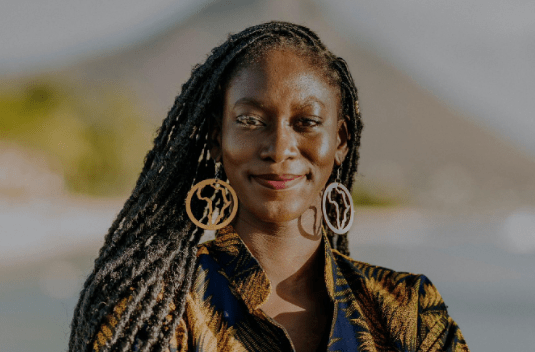
Valerie Lolomari, MBE, on The Need for Survivor-Centered Spaces

The Justice for Girls Convening & Festival will take place in Kenya soon, bringing together activists, survivors, policymakers and governments, funders, and leaders committed to ending female genital mutilation/cutting (FGM/C) and child marriage in this generation. It is a space for bold ideas, shared strategies, and collective action, grounded in lived experience and global collaboration, at a critical moment for the gender justice community. 

In the lead-up to the convening, we’ve been speaking with advocates and survivor expert leaders from around the world about what this moment means for the movement, what they hope participants will accomplish in Kenya, and the future they’re working to build together.

Below, Advocate and Survivor Expert Leader, Valerie Lolomari, MBE, reflects on the support needed to push this movement forward, the power of art in activism, and why survivors must be at the forefront of this movement.

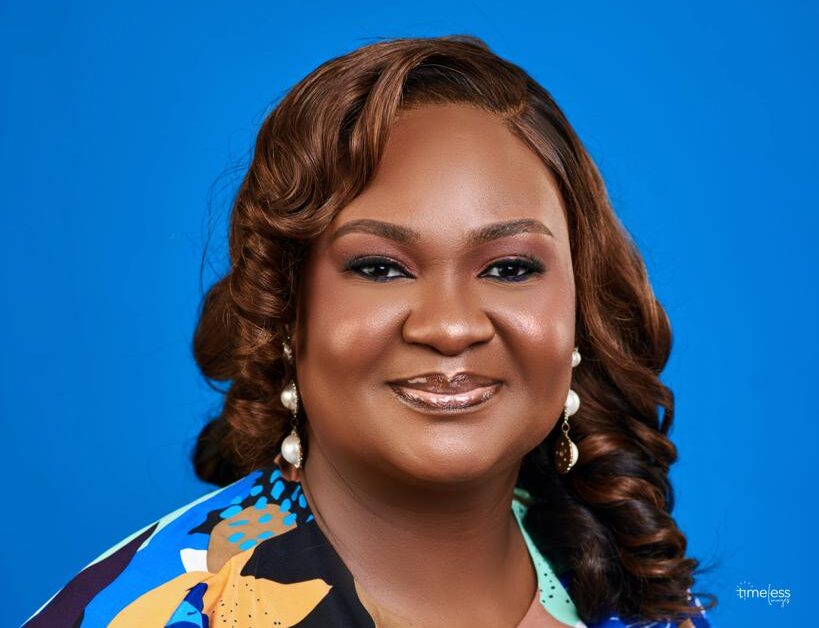
About the Author: Reverend Valerie Lolomari, MBE, CF, JP is the Founder and CEO of Women of Grace UK, a survivor-led organization supporting women and girls affected by female genital mutilation (FGM), gender-based violence, and trauma. She is a resilience coach, mental health practitioner, ordained minister, and internationally recognized advocate committed to restoring dignity, promoting healing, and influencing policy. As a survivor of FGM, she uses both her lived experience and professional expertise to champion survivor-centered practice, strengthen grassroots organizations, and create safe spaces where women and girls can heal, rebuild their confidence, and thrive. Her work has influenced local, national, and international conversations on ending FGM and advancing the rights of women and girls. 

Centering Survivors as Leaders

For Valerie, getting involved in the Justice for Girls Convening and Festival was a deeply personal decision.

“For me, this is not simply a campaign. It is deeply personal. I know the lifelong impact that FGM has on a girl’s body, mind, and future because I have lived through it. My journey has shown me that survivors are not just victims of harmful practices. We are leaders, experts, and agents of change. I joined this movement because I believe no girl should ever have to experience what millions of us have endured. Every girl deserves to grow up safe, valued, and free to make choices about her own life.” 

“Justice for Girls represents hope. It brings together survivors, communities, governments, and partners with one shared purpose, ending FGM and child marriage within a generation. I want to be part of building that future and ensuring that the voices of survivors remain at the centre of every decision that affects our lives.” 

At the Justice for Girls Convening and Festival, a movement-led global action plan will be announced to guide the next five years of strategic movement building. Valerie hopes the plan will translate the momentum of the convening into practical, sustainable action.

“Grassroots organisations are doing extraordinary work with very limited resources. We need long-term investment that allows survivor-led organisations to grow sustainably instead of constantly competing for short-term funding. I also hope the plan strengthens prevention through education, supports survivors with accessible health and mental health services, improves safeguarding systems, and holds governments accountable for the commitments they have already made. Most importantly, I want to see survivors involved at every level, from planning and funding decisions to research, policy development, and evaluation. Nothing about us should ever be decided without us. “

It is essential that this global convening is survivor‑led because those who have experienced FGM/C and child marriage understand their realities in ways that no else could. 

Survivors bring something that cannot be learned from books or reports. We bring lived experience, credibility, and a deep understanding of what our communities need. Our voices ensure that solutions are practical, respectful, and centred on those most affected. 

“At the same time, allies are equally important. Ending FGM and child marriage requires governments, healthcare professionals, educators, faith leaders, funders, researchers, and communities to work alongside survivors. Real change happens when lived experience and professional expertise stand together with mutual respect.” 

“A survivor-led movement supported by committed allies creates a partnership where everyone has a role, but the voices of those most affected remain at the heart of the work.” 

Survivors also have a deep understanding of the challenges this movement faces in a time of rising authoritarianism.

“We must respond with truth, compassion, and courage. Harmful practices are often defended using culture, tradition, or misinformation, but no tradition should justify violence against girls.” 

“We need to invest in community education, engage trusted faith and community leaders, amplify survivor voices, and involve men and boys as part of the solution. We must also use evidence to challenge myths while respecting communities and creating opportunities for honest dialogue. The conversation should never be about attacking culture. It should be about protecting girls and promoting the values of dignity, equality, and human rights that every child deserves.”

A Place for Healing and Advocacy

The convening places a strong emphasis on survivor wellbeing alongside a festival celebrating music, art, and storytelling. By bringing activism, healing, and creative expression together, the gathering creates opportunities for survivors to share their stories in ways that feel authentic and safe.

“Advocacy can be emotionally demanding. Many survivors spend years telling painful parts of their story in order to create change. Without spaces for healing, we risk asking survivors to keep giving while receiving very little in return. Healing restores strength, confidence, and hope. It allows survivors to rediscover who they are beyond the trauma. Music, art, storytelling, and shared experiences remind us that we are more than what happened to us.”

“I have seen this through the work of Women of Grace UK. When women are given safe spaces to heal, they begin to believe in themselves again. They become leaders in their families, communities, and organisations. Healing is not separate from advocacy. It is what makes lasting advocacy possible.”  

“One lesson I have learned through Women of Grace UK is that people heal best in places where they feel seen, heard, and believed. Many women come to us carrying years of silence, shame, and isolation. Before they can advocate for others, they often need someone to simply listen without judgement. When we create safe, compassionate spaces, confidence begins to return. Women discover their voice, support one another, and often become leaders themselves. That is the model I hope to share. Survivor-centred work is not only about responding to trauma. It is about recognising strengths, building resilience, and creating opportunities for women to lead change in their own communities.”

The convening will also be a place where a new fund is announced to mobilize resources for FGM/C. Giving grassroots organizations and activists the chance to advocate for better and more sustainable funding practices.

“Long-term investment changes everything. It allows organisations to plan beyond the next funding deadline and focus on lasting impact rather than survival. Sustained funding means we can provide consistent support for survivors, recruit and retain skilled staff, strengthen safeguarding, measure our impact properly, and build trusted relationships within communities. It also allows survivor leaders to develop their organisations with confidence and create opportunities for the next generation of advocates. The organisations closest to the problem are often closest to the solution. Investing in grassroots organisations is one of the most effective ways to create lasting change.” 

Looking Ahead

The convening aims to serve as a catalyst for the movements to end FGM/C and child marriage, and advocates like Valerie are determined to ensure that the momentum built in Kenya continues long after participants return home.

“We need clear commitments, measurable goals, shared accountability, and regular opportunities to learn from one another. I would like to see stronger international partnerships, continued collaboration between survivor-led organisations, and mechanisms that allow us to share resources, knowledge, and good practice throughout the year. If everyone leaves Kenya committed to taking one practical action within their own community, and we continue to support one another afterwards, this convening will have created something much bigger than a conference. It will have strengthened a global movement.”

“My hope is that history will look back on this moment as a turning point, when the world chose to stand with girls rather than harmful practices. I hope the legacy is a stronger, more united global movement where survivor leadership is recognized, respected, and properly resourced. I hope governments move from promises to action, communities continue difficult conversations with compassion, and every girl grows up knowing that her body belongs to her and that her future is full of possibility. “

“Most of all, I hope future generations will hear about FGM and child marriage as practices that existed in history, not as realities they still have to fear.”
Start Planning Your Journey

We look forward to welcoming you to Kenya for this important global convening.

Women in Liberation and Leadership

Women in Liberation & Leadership (WILL) is a survivor-led grassroots movement in The Gambia, driven by women who have endured Female Genital Mutilation and are now leading the fight to end it. Rooted in lived experience, WILL empowers survivors to reclaim agency over their bodies and choices, while mobilising communities to protect girls from FGM, child marriage, and gender-based violence. By building alliances with local institutions, civil society, and international partners, WILL ensures that change is not imposed from outside but grows from within, anchored in survivor leadership and community action to secure justice and dignity for future generations.

Wallace Global Fund

The Wallace Global Fund is a private grantmaking foundation based in Washington, D.C. Founded by Henry A. Wallace, a Vice President to Franklin Roosevelt a progressive leader, the Fund champions people-powered movement building and works to advance democracy, climate action, and racial, economic and gender justice. The Fund has been committed to ending female genital mutilation (FGM) since its inception. The Fund works to break the silence around FGM by directing its resources to survivor-led movements, frontline activists, and national, regional, and global advocacy organizations. The Fund plans to cease operations in December 2026. However, the Fund is developing a new FGM Frontline Funding and Advocacy Initiative. that will extend its longstanding work on FGM beyond the Fund’s closure and provide a catalytic funding mechanism for other donors. The Initiative will provide consistent, flexible funding and support to: (1) frontline organizations working on ending FGM, and (2) a movement support hub, which will direct resources to regional and global FGM intermediaries and organizations, support media and communications outreach and training, and launch a survivor leadership fellowship component. The Initiative will be officially launched at the FGM & Child Marriage Justice for Girls Convening & Festival.

There is No Limit Foundation

There Is No Limit Foundation is a 501(c)(3) international nonprofit organization. It’s a women-led organization committed to advancing dignity, security, and justice through advocacy, maternal health, and economic empowerment. Founded by two Guinean-American sisters, Mariama Camara and Aissata M.B. Camara. Based in New York City for the past 24 years, the foundation was built on the belief that women are the cornerstone of thriving communities. TINLF works to break cycles of poverty and violence by centering women and girls in everything we do.

The Vavengers

The Vavengers is a women and survivor-led movement working to end Female Genital Mutilation and intersecting Violence Against Women and Girls. The campaigning work focuses on improving health, legal and education systems through survivor-led advocacy work, convenings create safe spaces where businesses, civil society, members of communities, government representatives and funders can get together to work towards the shared goal of ending Gender-Based Violence and our connect work builds up community members by connecting them with critical services to make meaningful change in their life while removing vulnerabilities that leave new generations face. The Vavengers builds evidence through reputable policy frameworks and reports, runs survivor-led frontline workshops and works with a local-to-global approach to end FGM and intersecting violence such as forced marriage in our lifetime. The Vavengers also advocates for these forms of violence to be recognised as forms of modern slavery and sexual violence against women and girls, shifting the narrative to survivor-led in media, policy, education and community settings. The Vavengers understand and strongly believe, when women and girls rise, we all thrive.

The U.S. End FGM/C Network

The U.S. End FGM/C Network is a collaborative group of around 200 members, including FGM/C survivors, civil society organizations, foundations, activists, policymakers, researchers, healthcare providers, and others committed to promoting the abandonment of FGM/C in the U.S. and globally.

The Girl Generation

The Girl Generation - Support to the Africa Led Movement to End FGM Programme (TGG-ALM) is implemented by a consortium led by Options Consultancy Services and includes Amref Health Africa, ActionAid, Orchid Project, and Africa Coordination Centre for Abandonment of FGM. It works closely with the Population Council’s Data Hub, the programme’s data and measurement arm. The program continues to support and build the capacity of the existing Africa-led Movement to end FGM at multiple levels and at scale. The programme does not work in isolation but partners with the rest of the end FGM movement globally, including UN agencies.

The Asian-Pacific Resource and Research Centre for Women (ARROW)

The Asian-Pacific Resource and Research Centre for Women is a non-profit women’s NGO with a consultative status with the Economic and Social Council of the United Nations and an observer status with the United Nations Framework Convention on Climate Change. Based in Kuala Lumpur, Malaysia, ARROW has been working since 1993 to champion women and young people’s sexual and reproductive rights. ARROW occupies a strategic niche in the Asia Pacific region and is a Global South-based, feminist, and women-led organisation that focuses on the equality, gender, health, and human rights of women.

Sahiyo

Sahiyo is a U.S.-based 501(c)(3) nonprofit organization dedicated to empowering Asian and other communities to end female genital cutting (FGM/C) through dialogue, education, and collaboration rooted in community involvement. Founded in 2015, Sahiyo centers survivor voices, particularly within South Asian diasporas, and is guided by a commitment to bodily autonomy, consent, and the recognition of FGM/C as a human rights violation. Sahiyo works at the intersection of survivor-centered programming, community education, and systems change, centering the voices and lived experiences of women and girls from communities where FGM/C occurs. Sahiyo’s primary areas of work include survivor-centered healing spaces, community storytelling, intergenerational dialogue, professional education, and cross-sector capacity-building.

Global Platform for Action to End FGM/C

The Global Platform for Action to End FGM/C is a consortium of civil society organizations, champions, survivors, and grassroots representatives united in a singular mission: to support the abandonment and prevention of female genital mutilation/cutting (FGM/C). The core group includes Amref Health Africa, African Women Rights Advocates (AWRA), Coalition on Violence Against Women (COVAW), End FGM/C Africa Network, End FGM Canada Network, End FGM European Network, Equality Now, Orchid Project, Sahiyo, The U.S. End FGM/C Network, There Is No Limit Foundation, Tostan, The Girl Generation, The Asia Network to end FGM/C, and The Inter-African Committee on Traditional Practices.

Girls Not Brides

Girls Not Brides is a global partnership of civil society organisations dedicated to ending child marriage and supporting girls to realise their full rights and potential. Founded in 2011, the partnership brings together more than 1,400 member organisations across over 100 countries, including grassroots groups, national coalitions, international NGOs, research institutions, and advocacy networks. As a collective, Girls Not Brides connects members, fosters collaboration, and strengthens shared efforts to address child marriage in all its forms, recognising it as both a human rights violation and a barrier to sustainable development. The partnership works at local, national, regional, and global levels to drive change through evidence-based advocacy, policy influence, and knowledge generation. By convening diverse actors and centring locally led solutions, Girls Not Brides plays a pivotal role in advancing coordinated, inclusive, and sustainable action to end child marriage and promote gender equality worldwide. Girls Not Brides Kenya is a national partnership of over 135 civil society organisations working at both national and grassroots levels to influence policy and budget decisions that help end child marriage. Established in 2017 as the End Child Marriage Network Kenya, it officially became Girls Not Brides Kenya in 2020. The national partnership aims to amplify the voices of girls across Kenya to realise a society where all girls enjoy their rights and reach their full potential.The partnership operates across 14 regions, coordinated by regional leads, and covers Kenya’s 47 counties.

Orchid Project

Orchid Project is an international NGO, with offices in Nairobi and London, working at the forefront of the global movement to create a world free from FGM/C. Orchid Project was founded in 2011, and our approach remains centred on working with grassroots and geographically wider partners to provide communities with the tools they need to make long-lasting steps towards abandoning cutting for themselves. Our approach is community-centric, but aimed at achieving larger-scale change by catalysing a movement of organisations, youth and survivor activists, politicians, ambassadors and leaders at all levels, in the areas where we are most experienced. We do this by: i) undertaking research, generating evidence and curating knowledge to better equip those working to end FGM/C; ii) supporing and catalysing regional networks; iii) influencing global and regional policies, actions and funding towards ending FGM/C.

Equality Now

Equality Now is a worldwide human rights organisation dedicated to securing the legal and systemic change needed to end discrimination against all women and girls. Since its inception in 1992, it has played a role in reforming 130 discriminatory laws globally, positively impacting the lives of hundreds of millions of women and girls, their communities and nations, both now and for generations to come. Working with partners at national, regional and global levels, Equality Now draws on deep legal expertise and a diverse range of social, political and cultural perspectives to continue to lead the way in steering, shaping and driving the change needed to achieve enduring gender equality, to the benefit of all.

End FGM Canada Network

The End FGM Canada Network is a non-partisan group of survivors, individuals and organizations working to end female genital mutilation/cutting (FGM/C) and support survivors both in Canada and abroad. The Network unites members and stakeholders across Canada to share knowledge and foster collaboration within the field of FGM/ C, with a focus on creating platforms for engagement and offering trauma-informed culturally sensitive tools to enable frontline professionals to address FGM/C in Canadian communities. We also work with our international partners to advance the discourse and human rights battle to end FGM/C worldwide.

End Female Genital Cutting Singapore

End Female Genital Cutting Singapore envisions a world where female genital cutting (FGC), in Singapore and globally, is obsolete. We work to shift paradigms within Muslim communities by promoting medically accurate understandings of harm and recognising the diversity of religious interpretations on FGC. Alongside this, we engage and advocate with healthcare professionals, religious leaders, and policymakers to encourage clear and accountable public positions on the practice. We also educate the wider public, fostering solidarity and meaningful allyship from non-Muslim communities through accessible education, social media engagement, and concrete avenues for action.

Coalition on Violence Against Women (COVAW)

Coalition on Violence Against Women (COVAW) is a national non-profit women’s rights organization that was established in 1995 to respond to the silence of the Kenyan society in addressing Violence Against Women and Girls (VAWG). COVAW pursues an integrated approach focusing on: 1. Advocacy: Supporting evidence-based advocacy towards existence and enforcement of gender progressive norms, policies, laws and institutions. 2. Service delivery: Piloting and implementing innovative and scalable high impact responses to SGBV and other violations and increased access to SRHR solutions. 3. Capacity development: Offering technical support to women, girls, and key actors involved in addressing VAWG and promoting women’s access to rights, services, opportunities and resources. 4. Movement building: Supporting mobilization, organising, empowering of and solidarity with key actors to increase their consciousness and activism on rights and freedoms of women and girls.

African Women's Rights Advocates

African Women’s Rights Advocates (AWRA) is a Pan-African, survivor-centred movement advancing the rights, dignity, and leadership of African women and girls across the continent and the diaspora. As a holistic and intersectional collective of frontline activists, grassroots leaders, and changemakers, AWRA works across borders and generations to dismantle systemic injustices and end violence against women and girls in all its forms. Rooted in a “for us, by us” ethos, the movement centres African women’s voices in global gender justice spaces while challenging colonial power dynamics in funding, policy, and narratives.